Sunday, 22 May 2016

The Origin of Meiosis and How Sexual Reproduction Prevailed.

We’re studying now one of my favorite topics, evolution. The other day, we went after school to watch with our teacher the documentary film “Charles Darwin and the Tree of life”, presented by David Attenborough. I really enjoyed the documentary, but after watching it a question arose in my mind:

Supposedly, a characteristic doesn’t just appear. Is a step by step process, where each of these steps are a random mutation which presents an advantage for the individual which will increase the probability that the individual will survive and will pass it’s genes to it’s offspring. But what if this steps didn’t have any advantage to the individual at first and the process would not be beneficial until it was completed? 

The process I was thinking of was meiosis. If you think about it, what would be the advantage of an early meiosis without any outcome? It could not just appear like a complete process, and, In case it was an advantage on it’s first steps, why can we not find any organism which present this intermediate state of primal meiosis? 


For this reasons I decided to do some research on this topic.

The Origin of Meiosis

The Origin of Meiosis is still Unknown, but there are two main theories which try to explain where it evolved from:

—} Meiosis Evolved from Mitosis: 

In this theory, supposedly the first prokaryotic cells evolved Mitosis first. Then, when Mitosis was settled, Meiosis and sexual reproduction appeared.

The main support for this theory is that both Mitosis and Meiosis are very similar in terms of steps and they use almost the same molecular machinery (For example, The use of Spindle Fibers generated by the centrioles which separate the chromosomes during Anaphase). 

But this still doesn’t explain how variation processes appeared, like Chiasmata and crossing over.

—} Meiosis Evolved from prokaryotic sex:

Prokaryotic sex is a complex process which in simple terms consists in one bacteria releasing (Usually a plasmid of) DNA to the surroundings which is then taken up by another Bacteria and binds to it’s own DNA. This the simplest and most ancient way of achieving variation inside a single “specie”.

Support for this theory is that the earliest eukaryotic cells carry the genes for early meiosis, but are not expressed. This happens for example in Giardia Intestinalis.

However neither of this theories show in a clear way what was the origin of Meiosis.

How is Sexual reproduction an advantage? How did it prevailed?

An obvious advantage of sexual reproduction is that it leads to variation. However, this is a long term process, and Evolution doesn’t work like that. Evolution is based on short term advantages, advantages which increase the probability that the mutated individual would pass it’s genes to the offspring. Long term processes which don’t help the individual to survive in it’s first stages are much less likely to pass to the next generation, because they aren’t an advantage for the individual even though it takes energy for carrying it out.

This shows how improbable it was for Sexual reproduction to appear. The first Sexual reproductive individuals would be in competition with self replicating/cloning organisms and they would have to survive until sexual reproduction was actually an advantage.

With the next diagram I want to show how Sexual reproduction is a long term advantage over self replicating. 


During the second generation of sexual reproductive individuals, There would be both weak individuals and Strong individuals which reproduce this way, and they would have to compete against self replicating “normal” individuals. During this first competition, weak sexual reproductive individuals would die against normal self-replicating individuals, lowering drastically the amount of sexual reproductive organisms. However, Strong sexual reproductive individuals would survive, and normal self-replicating individuals would die against them. 

Therefore, over time, strong sexual reproductive individuals would be the only ones to prevail showing how variation is a long term advantage over cloning and self replicating. The survival of the fittest.


This is one of the blog posts that have taken me more time to do, but it can’t express how I feel about this topic and how amazingly interesting it can be. 

Sunday, 15 May 2016

Our own GMO. Glowing E. Coli!

We just finished genetics a week ago in biology IB. We’re starting Taxonomy now, but before that, we finished one of my favorite topics with one of the experiments I’ve most enjoyed this year. 

The experiment consisted in, by genetic engineering, trying to insert a gene into E-coli bacteria in an LB agar sample which allowed it to glow under UV light.

For doing this, we prepared four plates of LB agar. The first one didn’t have anything in special apart from LB agar. The second and the third one one had ampicillin (A type of antibiotic) apart from LB agar. The fourth one, apart from this two, had Arabinose on it, which is a type of sugar.


In my group we did also plate 5 and 6 because we had extra LB agar. They were the same than plate 4.


Then we prepared four samples of E-coli for each of our plates. The first two didn’t have anything in special, but in the other two we inserted a vector named P-Glo, which can be seen in the diagram: 


The vector presents 3 important parts. First of all, a promoter sequence of DNA based on the presence of arabinose sugar attached to the green fluorescent gene. This means that for the gene to be translated into a protein, there has to be arabinose sugar in the sample. The green fluorescent gene translates into a protein that allows the organism to glow under UV light. The other important section is the gene of ampicillin resistance, which will allow the bacteria to survive even if there’s ampicillin in the sample. 


For introducing the genes into the last two samples, we poured some vectors of the gene that was a previously copied by a PCR machine into the two last samples with E-coli. Then we putted both samples in a water bath at 42 degrees. This would make the bacterial membrane of the E-coli permeable for the Vector P-glo to pass through and being used by the bacteria.


Then we letted the bacteria to grow and multiply for two days and we got the following results:

-The first plate had a big group of E-coli visible on it, but these ones didn’t have anything in special because we didn’t inserted the vector on them. 

-On the second plate, all the E-coli had died. This is because the Agar had ampicillin on it and the antibiotic killed the bacteria.

-The third plate had E-coli on it but they weren't able to glow. The reasons for this is that even if they had the P-glo vector inside of them (Which gave them the resistance to the ampicillin, the reason why they survived), there wasn’t any arabinose sugar on the sample. Because of this, the promoter didn’t activate, and the glowing gene wasn’t translated into the protein.

-Finally, on the fourth plate we had glowing bacteria! In this case there was arabinose on the sample, so the glowing gene was translated into a protein that gave the E-coli the ability to glow under UV light.


I’ve really enjoyed this experiment and shows me that biology is even more fun than what I expected. We’re starting Evolution now with our other teacher, let’s see how it goes!

Sunday, 1 May 2016

Creating our own little "Earth".

As I said in my previous blog posts, we’re studying ecology at the moment in Bio HL IB. The other day, having a lesson about the same topic than in my last blog post (The correlation between CO2 levels and global temperature), we carried out a really simple experiment with the aim of showing us that this correlation can actually exist in a much smaller level if he have three things: Carbon dioxide, a sealed mini-atmosphere and a source of light.

The experiment consisted in the following steps:

-You take two flasks.
-Cover the base with a thing layer of water.
-Put a thermometer in each flask.
-in a side of one of the flasks, we fill a conic flask with Calcium Carbonate (CaCO3) and we seal the top of the conic flask connecting a tube from it to the nearest flask.
-We cover both Flasks with a plastic layer, leaving a space for the thermometers and the tube in one of the flask that is connected to the conic flask. 
-We uncover the conic flask and we pour hydrochloric acid. Immediately after that, we seal the conic flask again, which is connected to the other flask.
-We put both flasks under a source of light like a lamp, arranging them in a way that both get the same amount of light.

So what do we expect to happen?

Both flasks should have the same initial temperature, 21ºC in my case, but when they are heated by the light, the one that is connected to the conic flask should become hotter, because CaCO3 reacts with Hydrochloric acid forming CO2 (Which will pass through the tube), CaCl2 and H2O (Which will remain in the conic flask). As we end up having more CO2 in one flask than in the other one, we should end up with more temperature in the flask with extra CO2.


And this actually was what happened, after 30 minutes, the normal flask ended up having 30ºC and the one with extra CO2 ended up having 32ºC. It may not look as a big difference, but we have to take in count a lot of factors. Although the Extra-CO2 flask should had a bigger temperature because the CO2 traps heat and doesn’t let it get out of the flask, there wasn’t a lot of time for this to happen. Also, it will loose a bit of heat because the room was at a much lower temperature. The water would also have an effect, as it has a high specific heat (Amount of energy needed to heat or cool down an object), but it is needed because it makes much easier to measure the temperature with the thermometers… And even with all this factors, the CO2 was able to rise the temperature 2 centigrades! This shows us how CO2 levels have and incredible effect in global temperature and how they are absolutely linked together.


Sunday, 24 April 2016

How a little fern called Azolla drastically cooled down the earth 50 million years ago.

As I said a couples of posts ago, we have started Ecology in Biology IB. Today in our lesson, we talked about climate change. more particularly, about how the CO2 levels affect to the global temperature and they both increase and decrease together at the same rate.  
(Photo credit: Bioknlowledgy)

This afternoon I was watching a couple of videos from SciShow (https://www.youtube.com/channel/UCZYTClx2T1of7BRZ86-8fow) and I was really surprised when I realized that yesterday they posted a video about this exact same thing!

Link to the video:

What the video is talking about is one of the main hypothesis about how the earth’s temperature drastically decreased 50 million years ago. And this reason is a Fern called Azolla, a small fern that lives over fresh water which flourished around 50 million years ago in the northern arctic sea, covering millions of square kilometers and almost lowering the CO2 levels in the atmosphere by half. By doing this, as CO2 is a gas which contributes to the greenhouse effect, the temperature was reduced drastically, leading to a new glacial period.

A lot of research is being done at the moment about Azolla, and one of the main questions that the researchers want to solve is… Would Azolla be able to cool down the earth AGAIN under the right conditions?

But this is just a little summary, in the video they explain it much deeply and better, so, go check it out!

Monday, 11 April 2016

DNA profiling.

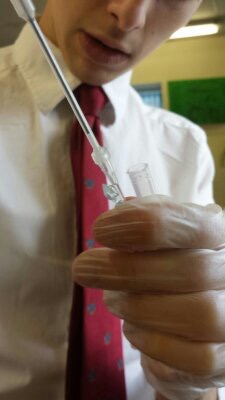
We are finishing genetics in our Biology lessons, and one of the main experiments we performed was DNA profiling. For this experiment, we used gel electrophoresis. An important step before we start is to put gloves on, so we don’t put any pieces of our own DNA into the sample and contaminate the results.


We placed four identical copies of the same DNA strand into four containers. The first container was empty, but the other three had different restriction enzymes. Each of this restriction enzymes cut the DNA strand after different sequences. These enzymes were EcoRl, BamHl sonf HindIII.

After placing the DNA in the different containers, we placed the containers into a hot water bath (About 36º C but I’m not completely sure) for the enzyme to work correctly and a bit faster. while we wait for the enzyme to cut the entire pieces of DNA, we poured agarose gel into the electrophoresis tank and and let it there a couple of minutes so it solidifies.


While the gel in the electrophoresis tank is solidifying, we mixed the samples (each of them separately) with ink. When the gel is solidified we placed two carbon fibre tissues on each side of the electrophoresis tank. Then we put some TBE buffer on top of it. After that we pour the samples of DNA already mixed with the ink carefully into the wholes of the gel with a micro syringe through the buffer. 


As the DNA is negatively charged, it would be attracted to a positive pole of electricity, but it would be more difficult to attract the big strands of DNA than the smaller ones so if we let the magnets attract the different samples through the gel for a couple of hours, we will be able to appreciate different strands of DNA placed through the gel, the ones that are nearer to the opposite site of the tank would have to be smaller and the ones that are nearer to the other site of the tank should be bigger. by doing this, we can compare the result to another sample and get conclusions like if they are the same person or even if they are related. 


For doing this, we connected two wires to each site of the tank, attaching them to the carbon fibre, creating therefore an electric attraction that is able to move the gel. After being connected for two hours, we disconnect the electricity and analyze the results in the gel.

(Photo credits: Oliver Ferres)

Sunday, 3 April 2016

Pellet Dissection!

A couple of days ago (before the easter holiday started) we did an experimental work in Biology which didn't seem really appealing at first, but ended up being fun and interesting. We are still in the topic of ecology, so the experimental work wanted to show us how the loss of biomass in the different trophic levels is actually expressed in nature.

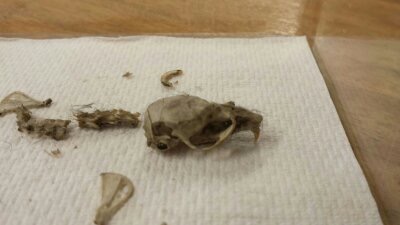
The experimental work consisted in dissecting Owl Pellet. Pellet is the mass from the food that can’t be digested and is regurgitated by some species of carnivorous birds such as Hawks and owls. This mass can present indigested feathers, hair, insect exoskeletons and even bones from small vertebrates such as rats or mice. 


What we tried to do in the experiment consisted in dig into the pellet with the aim of finding bones from this type of small mammals, and I have to say even if it looked a bit nasty at first, it ended up being pretty addictive and exciting to even being able to find skulls, jaws, legs or even full skeletons of rats.


Saturday, 2 April 2016

Synthetic bacteria shows us the essential genes for life

This morning I was watching this youtube video from Scishow I found it amazingly interesting:


During the first part of the video it explains us how a group of scientists and researchers from “Celera Genomics” lead by the president founder of the company Craig Venter have been able to create a synthetic bacteria with the minimum amount of genes necessary for the organism to survive. 


                            (Photo credit: Tom Deerinck & Mark Ellisman/NCMIR/University of California at San Diego)


For achieving this, they carried out the following experiment during the last years: They started with the genome of the bacteria “JCVI-syn1.0”, commonly known as “Synthia”, a Genetically engineered  bacteria created by the same team in 2010 witch is considered as the world first synthetic organism. They started up with the original 901 genes from Synthia and then started deleting with restriction enzymes the genes which they didn't consider “essential” for the bacteria to live, and then testing if the new organism was able to survive after cutting down that gene.

After testing this for years, they ended up with an organism which the called JCVI-syn3.0 which presented ONLY 473 genes! a really small amount of genes considering that the smallest genome from a bacteria known in nature is 525 genes and Humans present from 20000 to 25000 genes. This experiment is not only important because it created a living organism with the smallest possible genome, but also because it showed us which genes in an organism are actually essential for it to be “alive”, considering to be alive to be able to process organic matter into energy allowing it to grow and therefore reproduce by replicating itself.

What is more interesting about these experiment is that inside of these genome there are 149 genes which scientist don’t actually know what they code for! This is 31% of the genome of the bacteria and we don’t have any idea of what it does, but we know they are completely essential for the bacteria for being able to live. This is like saying that we don’t know one third of essential biology, and shows us how much we still have to research for achieving full knowledge in this field.

On the other hand, this experiment is part of our first steps in creating synthetic life, and it carries some ethical issues with it  which consist in what some people refer to as “playing god”. There’s an article on The New Scientist about this, and it tell us that we’re far from “playing god” yet. This is the link to the article.


https://www.newscientist.com/article/mg23030672-700-breakthrough-in-synthetic-biology-is-far-from-playing-god/